
2023 – present
The Maker’s Table
Breaking barriers to nutrition education.
Since working with Memorial Sloan-Kettering’s Immigrant Health and Cancer Disparities Service, I’ve felt called to promote nutrition security among underserved populations by improving access to food and culturally-sensitive, multilingual nutrition care.
The Maker’s Table was born out of a desire to bridge a need for nutrition education among those facing inadequate access to individualized appointments with a dietitian due to limited insurance coverage, financial barriers, limited evening and weekend appointments, and language barriers.
2016 – present
Food for Thought
Discovering the human element in local food. Diversifying the voices contributing to food system reform.
As a 2nd year undergraduate, I was hungry to learn as much as I could about the food system. To better inform myself and others, I met with local farmers, hunger relief organizations, and professors to learn about local agriculture, food insecurity, and social entrepreneurship. Inspired by Brandon Stanton, I captured environmental portraits to put a face to the story and reinforce the human element in food. Little did I know, this passion project has led to my current interest in interdisciplinary, nutrition-focused work involving narrative research, reportage, and concerned photography.
Funding: CALS Alumni Association Grant (Dec 2016)

2023
Hunger Matters
The Clinician’s Response to Food Insecurity: A Practical Guide
As I’ve begun to incorporate food insecurity screening into my outpatient visits, my awareness of hunger’s pervasiveness has grown. There have been days when 50–75% of my patients and families report worrying about or not having enough money for enough food to last through the month.
Hunger is a complex problem in the U.S. and clinicians are uniquely positioned to help support patients in navigating food insecurity. This guide, accompanied by an article on Medium, offers 10 practical steps for clinicians interested in prioritizing hunger screening as a part of their clinical workflow and ideas to help patients combat hunger.

2021
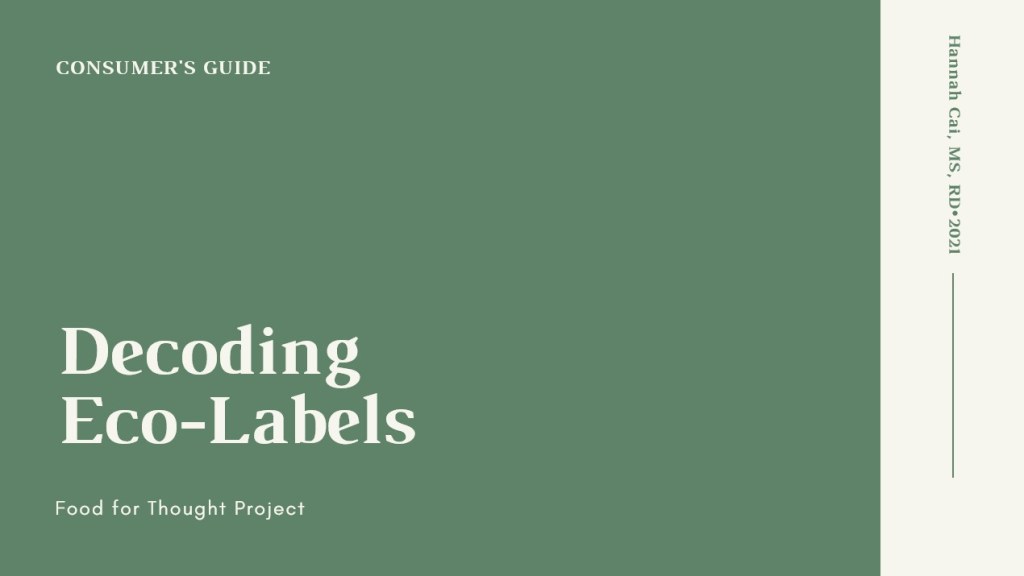
Decoding Eco-Labels
Today, foods are labeled with a confusing clutter of stickers, symbols, and catchphrases, and it’s overwhelming to keep up with what they mean and which ones are regulated. How is a well-intended consumer supposed to know who to trust?
This resource provides an overview of some of the most common eco-labels. Through this, I hope to support concerned eaters in making educated investments.
2020
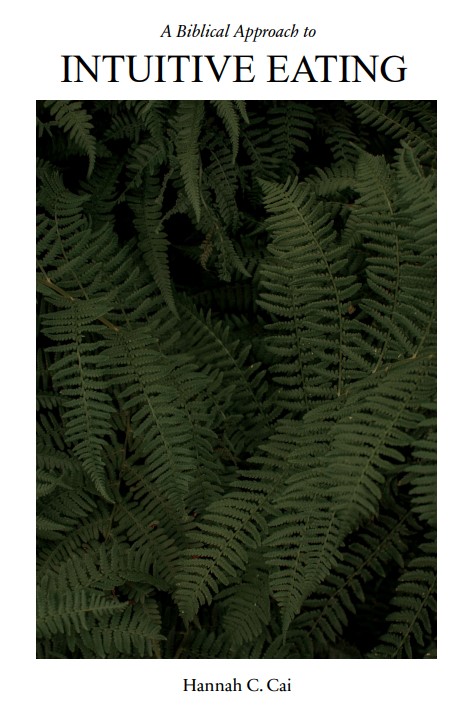
A Biblical Approach to Intuitive Eating
Everybody seems to have an opinion on how to look, what to eat, and ways to exercise. But what unchanging, infallible instructions has the Maker of human bodies and food provided to help navigate these areas and live an abundant life?
This 4-part, 60-ish paged guide serves to supplement Tribole and Resch’s work and makes a case for their intuitive eating framework from a biblical lens. You can expect a few activities and questions for personal reflection.
2018
CSH Magazine: Clinician Interview Edition
Exposure to a variety of people and environments is invaluable for individuals interested in pursuing a career in healthcare.
Through the generous time of Children’s Specialized Hospital’s clinicians, I dipped my toes into other fields besides nutrition, such as rehabilitation technology and animal-assisted recreational therapy. This magazine is an accumulation of experiential wisdom and personal narratives. I hope in reading this, you’ll leave with a greater respect for the clinicians who dedicate their lives to specialty pediatric care.

2018
Is organic food more healthful than conventional food?
A mix of all things interdisciplinary, this poster reflected my budding interests in sustainable agriculture, nutrition communications, and photography. Under the mentorship of Dr. Matthew Ryan, I conducted a literature review and presented a poster at the first annual Cornell Organic Symposium.
 Hannah Cai